

Scotch Whisky vs Japanese Whisky in 2026
| 26-01-2026 | By Whizzky Team |
Scotch and Japanese Whisky: Let’s Chat About Their Split Paths in 2026
You know how Scotch and Japanese whisky dominate the scene right now? It’s fascinating—they started from Scotland’s playbook back in the early 1900s, but ended up going their separate ways thanks to terrain, rules, and that cultural spark.
First Off, the Rules Keeping It Real
Scotch has those ironclad UK laws: everything distilled, aged three years minimum, and bottled in Scotland—no extras but water or plain caramel colouring. Japan caught up with JS&LMA standards in early 2024, insisting on distillation and three years’ ageing there too. Mind you, some “World Blended” stuff sneaks in Scotch imports, which Scotch would never allow.
How They Make It: Teamwork or Solo Act?
In Scotland, it’s all about swapping casks between distilleries to nail those blends. Japan? Suntory and Nikka keep it in the family, juggling still shapes and yeasts on-site for all sorts of flavours. And those high spots at 700–800 metres? Lower pressure means cooler runs, lighter and more aromatic than Scotland’s beefier coastal spirits.
Ageing: Climate’s Sneaky Role
Scotland’s steady chill loses just 1–2% to the Angel’s Share each year—slow and steady. Japan’s wild temps, -5°C to 35°C, crank it to 3–5%, so the oak really digs in. That’s why a 12-year Japanese whisky often punches above its age, more wood-forward. Both love bourbon and sherry casks, but Japan’s Mizunara? That 200-year oak gem brings sandalwood, coconut, incense—proper unique.
What You Taste in the Glass
Tough to pin down with all the variety, but Scotch hits earthy, peaty, malty—think Islay smoke or Speyside fruit. Japanese goes brighter: yuzu zing, sakura florals, smooth as silk, ace in a highball or with light bites.
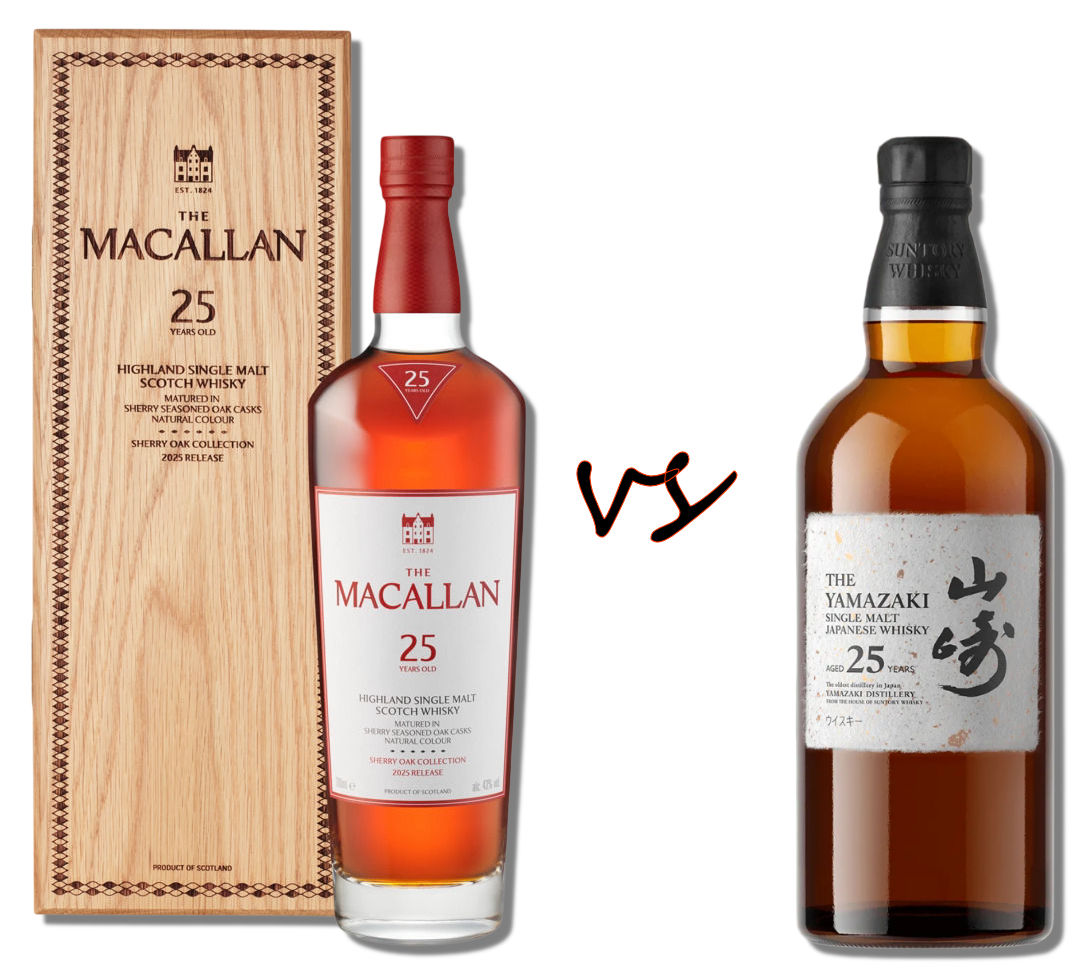
Fancy a Pour? Macallan 25 Sherry Oak vs Yamazaki 25
Ever lined up The Macallan 25 Years Sherry Oak against Yamazaki 25 Year Old? Macallan’s a sherry bomb—deep mahogany, nose bursting with raisins, figs, dark chocolate, and Christmas cake spice; palate’s velvety with clove, orange zest, and ginger, finishing warm and oaky. Yamazaki counters with elegance: amber glow, incense and persimmon on the nose, then sandalwood, tart plum, ginger spice on the tongue, and a smoky Mizunara linger. Macallan’s bold and brooding; Yamazaki’s layered and harmonious. Which grabs you first?
Next time you’re pouring, try side-by-side. What do you reckon?


